
The constant refrain of this administration, beginning during the campaign and continuing to the present day, has been that they are getting rid of “the worst of the worst.” (DHS has a page of their website devoted to showcasing “The Worst of the Worst” criminal aliens they’ve apprehended.) We rarely hear a public statement from ICE or DHS without being reminded that they are taking rapists, murderers, and gang members off our streets.
This is one goal that nearly all Americans support: 89% of registered voters say illegally present people who commit violent crimes should be deported. This isn’t controversial; it’s common sense. It was smart for Trump to run on this, and it’s smart that his administration continues to claim that’s what it’s doing.
To those whose information sources tend to favor this administration, it may seem that only far-left agitators and paid protestors would oppose the good work of ICE. After all, who besides extremists and open-borders activists could be against removing the worst of the worst from our communities?
If that were all that was happening, I wouldn’t be writing this, Minneapolis wouldn’t be a war zone, and several people would still be alive today.
I want to show folks from my former party and my former way of thinking about immigration enforcement why people of good faith—people who believe in secure borders and common sense immigration enforcement—can and should oppose ICE as it exists today. There are too many angles to cover to convey the full scope of this reasoning in just one article; it will have to be a series. I hope you will stick with me and find it useful.
First up: “The Worst of the Worst.”
While the overwhelming majority of Americans want violent criminal aliens removed, when it comes to immigrants who’ve lived here for many years without committing any crimes, less than one in four Americans say they should be deported. It’s a deeply unpopular policy—which is why the administration keeps touting its removal of “the worst of the worst,” even though they make up a tiny percentage of the deportations it’s conducting.
By the end of November last year, over 73% of detentions had been of immigrants with no criminal convictions whatsoever. ICE’s own data shows that about 5% of their detainees have been convicted of violent crimes.
So, who are they detaining and deporting? I’m glad you asked. Here are just a tiny fraction:
Maher Tarabishi came to the US in 1994. He was allowed to remain because he was the primary caregiver for his son, a US citizen, with a debilitating muscle disease. He checked in regularly with ICE as required, and has no criminal record. But he was handcuffed and detained at one of his routine check-ins. While he was in ICE custody, his son’s condition rapidly worsened, and after three months, he died. The family pleaded for Maher to be allowed to attend his son’s funeral. ICE’s decision came “from higher up”: No.

Vilma Palacios was brought to the US at age six. She grew up in Louisiana and graduated college with a nursing degree. She had a pending asylum case, and checked in regularly with authorities. In June, after getting her car inspected for a tag renewal, she was pulled over, handcuffed, and put in a detention center for six months before she was shackled and deported to Honduras, a country she has not seen since she was six years old.

Viktoriia Bulavina came to the US legally in 2022 from Ukraine. Her legal status has never expired at any point since, and she married a US citizen. They were at their final green card appointment when federal agents handcuffed her and led her away. Her husband did not know where she was for days.
While in ICE custody, she was forced, along with other female detainees, to use an open toilet in view of the guards, were given expired food, had to huddle together for warmth, and were shackled whenever they had to be moved.
(ICE released her after three days with no explanation.)
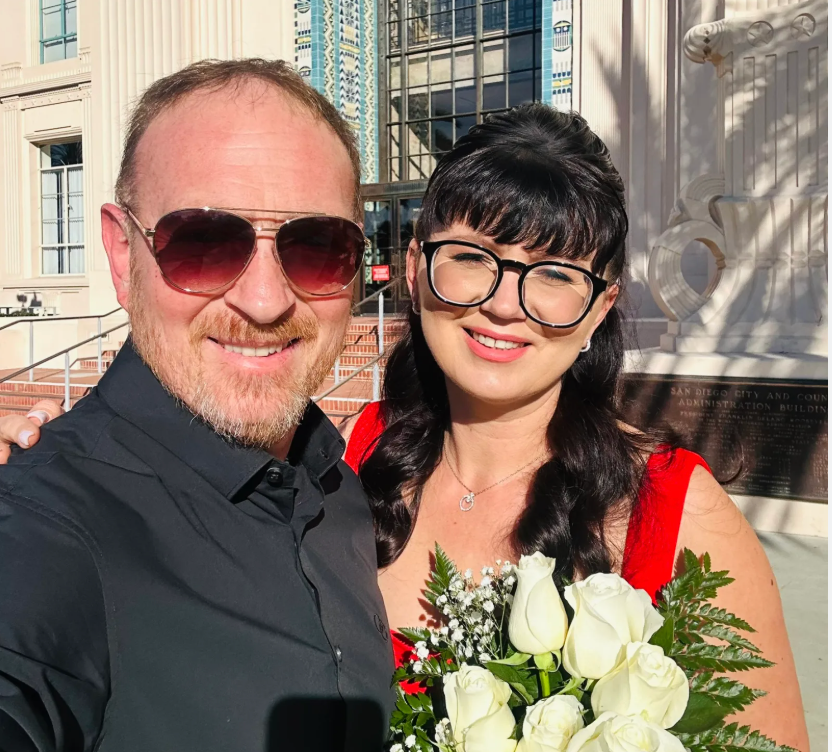
Melissa Tran arrived in the US at age 11, legally, on a greed card. She was a lawful permanent resident. At age 18, she stole some checks from her employer. She pleaded guilty. Over the next 20+ years, she married, had four children, started a nail salon, and checked in regularly with immigration authorities.
Under Trump 2.0, ICE arrested her, kept her in detention for five months—where the stress caused her hair to grey and she lost 30 pounds—until a judge ordered them to release her, then three weeks later they deported her to Vietnam because of her decades-old conviction. She was shackled for the entire 48 hours it took to get to Vietnam. She is still there, thousands of miles from her husband and children.
In a statement about Melissa, DHS said, “President Trump and Secretary Noem’s message is clear: criminal illegal aliens are not welcome in the United States.”

Donna Hughes Brown, an Irish citizen who has lived in America legally since she was 11 years old, is married to a combat veteran—and that is likely the only reason she escaped deportation at age 59. Over ten years ago, she wrote two bad checks, totaling less than $60. For these heinous crimes, ICE detained her when she returned from a trip to Ireland in July. They kept her in detention for 143 days, until her husband testified at a hearing in DC, 18 US Senators signed a letter of support, and a judge ruled she was not a threat to her community.

Subu Vedam came to the US from India at 9 months of age, was a legal permanent resident, and had his citizenship application accepted before he was arrested and charged with the murder of his friend. Subu spent over 40 years in prison for a crime he did not commit, until new evidence exonerated him. As soon as he was released after this monumental injustice, ICE arrested him with the intention of deporting him, because of a drug offense from 1984. (Two courts have since halted his deportation.)

Sergio Garcia, father to four US citizens and beloved owner of a restaurant in Waco that was a favorite of the Bushes, had built a life in the US for 36 years. He had no criminal record, but a decades-old deportation order because of an illegal re-entry, which ICE had never tried to enforce until 2025. That’s when agents arrested him, and within 24 hours had deported him across the border to Mexico.

Barbara Gomes Marques went with her US citizen husband, Tucker May, for her scheduled green card hearing in Los Angeles in 2025. She thought she was taking another step toward citizenship, but instead she was arrested by Customs and Border Protection agents.
“She put so much effort into looking nice, because she was excited to take a step toward becoming an American,” Tucker said, “and I had to go home, and I had to put away the shoes that they took off her feet and gave to me in a plastic bag.”
He says they told Barbara she was being arrested for missing a court date in 2019, something neither of them had any idea about.
“They put her in hand shackles and in leg shackles, and around the waist as well, like she’s some hardened criminal. She had tears streaming down her face, and she told me one of the ICE agents pulled out his cell phone, laughing, and took a selfie,” Tucker said.
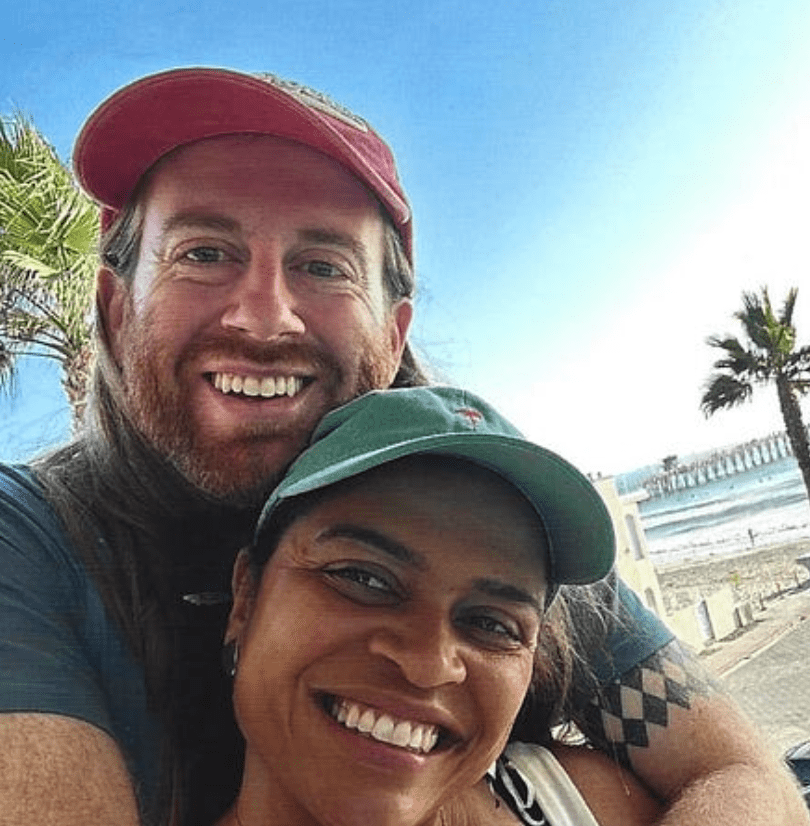
In September, ICE obtained a warrant for a Hyundai plant which named four (4) Mexican nationals as its target. ICE then raided the plant with 400 agents. Because the agents did not understand the law regarding B-1 visas and work authorization (and because of Stephen Miller’s 3000-arrests-per-day quota), they decided to arrest 330 South Korean workers.
The Koreans were kept imprisoned for eight days in a detention facility that “failed to meet any of the UN Standard Minimum Rules for the Treatment of Prisoners.” Their hands were bound to their waists, forcing them to bend over and lick water when they were thirsty. Their arrest and subsequent treatment caused an international incident and enraged our South Korean allies.
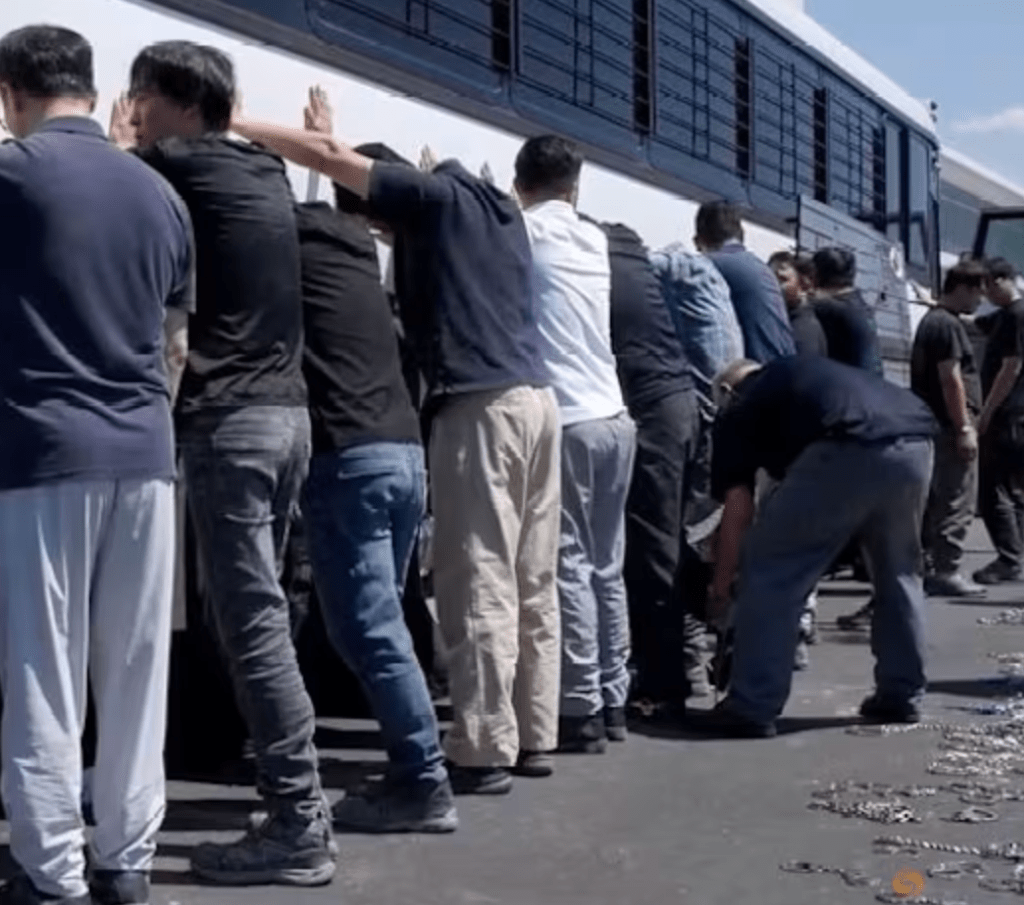
Jemmy Rosa, a legal resident and mother of three little girls, was arrested when she and her family came through customs on their way back from vacation in Mexico. A 22-year-old conviction for marijuana possession (which is no longer a crime in her state of Massachusetts) was enough reason for ICE to detain her. They kept her in custody for ten chaotic days, transferring her between multiple detention facilities—including one for men only. She has diabetes and asthma and did not receive proper medical care. She had to be hospitalized twice.
Her husband, finally reaching a CBP official, asked about his wife’s medical care. “He said, ‘We’ll notify next of kin if she dies.’ And at that moment, I knew that I was no longer dealing with humans,” her husband says.
When they released Jemmy, they left her in the street, in the rain, with no phone, 30 miles from home.

Isidro Perez, a Cuban national who had lived for nearly 60 years in the United States, was detained in 2025 because of a marijuana conviction from 1984. Isidro had a weak heart, but he was not given the medication he requested, he was kept in a place he called “the fridge,” and had to sleep on the floor. He was 75 years old. He died in ICE custody.
Donna Kashanian has been in the US for nearly 50 years. She is the wife and mother of US citizens, has no criminal history, and is a volunteer for Habitat for Humanity and her local school district. While her request for asylum was not granted, she was permitted to stay in the country as long as she continued to check in regularly with immigration authorities, which she has done without fail—even when she was displaced by Hurricane Katrina.
She was only released from detention, and is only still in the country, because of the intervention of her Congressman, Steve Scalise (R). Not everyone is so fortunate.

Last month, a Venezuelan couple took their 7-year-old daughter to the emergency room for a bad nosebleed. She never saw a doctor because federal agents surrounded them in the parking lot, handcuffing and detaining them before shipping them off to a Texas detention facility.
DHS claims they entered illegally in 2024 by using a Biden-era app which allowed immigrants without documents to schedule appointments at designated ports of entry. Considering Biden was president in 2024, use of the app was heavily encouraged by CBP, and was the only way for Venezuelans to have successful asylum claims, it is difficult to see how this qualifies as an illegal entry, even though Trump immediately ended its use when he took office in 2025. Indeed, some outlets are relying on common sense and plain facts rather than DHS statements, and simply reporting that they entered legally.
The family is still locked up in the Texas detention facility, but will receive a visit from their Congresswoman, who is trying to get them released.

Friends, these stories are endless. I could go on and on, and these are only the stories that have been reported in the press. The human toll is staggering.
Perhaps reading these stories and seeing these faces has not moved you. Perhaps you are still entrenched in the belief that every single unlawfully present person must be removed—regardless of the catastrophic effect on our economy. That is certainly your prerogative.
What I hope to help you understand is that you are in a very small minority. Most Americans do not want this, and many of us are infuriated by the cruelty inflicted on people who came to this country to build lives, to work hard, to become Americans. We don’t see these people as the worst of the worst, because they obviously are not. We don’t feel safer with them locked up or deported: we feel diminished by the loss of our neighbors. And we don’t trust the government that keeps lying to us by calling them “the worst of the worst.”
I’ll leave you with some words from Ronald Reagan: “It was once written that America is great because America is good, and if America ever ceases to be good, America will cease to be great.”
What can we do?
Keep up the pressure on your representatives. But also, seek out organizations in your area that serve immigrants and refugees, and find out how you can help.
 Wilderness Dispatch
Damn, Jaclyn! The hits just keep on coming! my heart is full with the amount of reading and research you do to share these posts! Thanks for all you do to keep our hearts beating for a better nation! I’m grateful for your voice right now!
LikeLike
Thanks so much for this encouragement, Paul! I do this because I want to—because I feel compelled—but it does take a lot of time and effort, so I really appreciate your kind words. Thanks, as always, for reading and responding!
LikeLike
this is horrendous, and stupid at best. If you don’t look American (whatever that means) you can be beaten, jailed, and sent back to a country you never knew you were from. That’s how mean this is. It also means that about the only safe people in this country are the ones whose ancestry goes back to Hiawatha. And you damn well better have signed papers to prove it.
ICE is primarily made up of gun loving thugs, no brains but a lotta bullets and the freedom to punch anyone they like. I have a good friend in NYC who emigrated years ago with his parents, he stayed, got his citizenship, driver’s license, and is becoming a song writer. I tell him, keep a low profile. please.
LikeLike